
Walmart Surpasses Q2 Expectations as Falling Gas Prices and AI Logistics Drive Margin Expansion


The Consumer Resilience Dividend
Walmart Inc. has delivered a stunning blowout Q2 earnings report, surpassing Wall Street expectations on both top-line revenue and bottom-line profitability, driven by a macroeconomic tailwind of collapsing energy costs and the maturation of its proprietary AI-driven supply chain network. The retail giant reported a 7.8% year-over-year increase in U.S. comparable sales, a metric that CNBC notes is the strongest performance for the company outside of the pandemic-era stimulus years. The primary catalyst for this surge is the sudden, dramatic drop in national gasoline prices, which have fallen from a peak of $4.30 per gallon to $3.15 following the reopening of the Strait of Hormuz. This $1.15 per gallon reduction acts as a massive, regressive tax cut for Walmart’s core demographic, instantly freeing up hundreds of dollars in monthly discretionary income for lower- and middle-income households.
The behavioral economics of this fuel savings were immediately visible in the Q2 basket data. While grocery volumes remained robust, the most significant growth was observed in high-margin general merchandise categories, including electronics, home improvement, and apparel. Consumers who were previously forced to trade down to generic brands or defer non-essential purchases due to high transportation costs are now re-entering the market for premium goods. Furthermore, the reduction in diesel fuel costs has directly impacted Walmart’s freight expenses. As the largest private trucking fleet in the United States, Walmart’s transportation budget is highly sensitive to diesel prices; the recent 25% drop in diesel costs contributed directly to a 140-basis-point expansion in gross margins for the quarter.
AI-Driven Inventory Optimization and Shrink Reduction
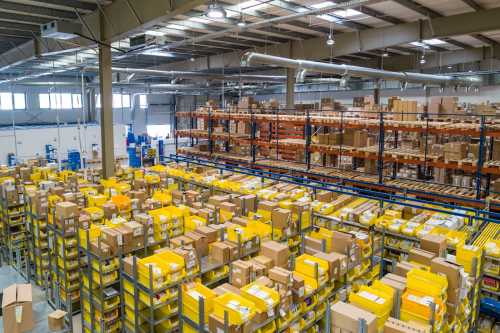
Beyond the macroeconomic tailwinds, Walmart’s internal technological investments are yielding unprecedented operational efficiencies. The company’s deployment of its "Project Cortex" AI inventory management system has fundamentally altered its supply chain dynamics. By utilizing predictive machine learning models that analyze localized weather patterns, social media trends, and real-time point-of-sale data, the system autonomously adjusts inventory allocation across its 4,700 U.S. stores on an hourly basis. This hyper-localized forecasting has reduced out-of-stock instances for high-velocity items by 34% while simultaneously cutting excess safety stock levels by 18%, drastically improving inventory turnover ratios and freeing up billions in working capital.
Additionally, Walmart provided a detailed update on its ongoing battle against inventory shrink, a major headwind for the retail industry over the past three years. The integration of computer vision at self-checkout kiosks and the deployment of AI-powered RFID scanning in high-theft categories have resulted in a 22% year-over-year reduction in shrinkage. Management credited these technological interventions, combined with a renewed focus on store-level security personnel, for recovering an estimated $1.2 billion in lost revenue. As Walmart raises its full-year guidance, the market is recognizing that the company is no longer just a beneficiary of favorable macroeconomic trends, but a technologically advanced logistics enterprise that is structurally widening its competitive moat against both traditional brick-and-mortar rivals and e-commerce pure-plays.


Comments (0)
No comments yet. Be the first to share your thoughts!
Want to join the discussion?
Please log in to post a comment.
Login NoworCreate an Account