
WHO Finalizes Historic Pandemic Treaty, Mandating Equitable Vaccine Sharing and Genomic Data Transparency

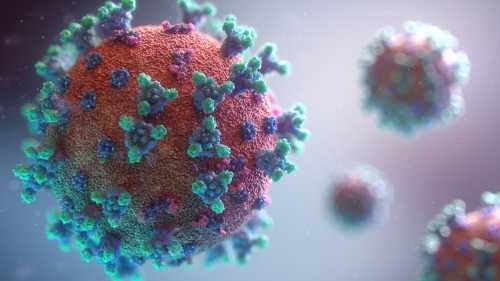
GENEVA — Following more than three years of intensive, often contentious negotiations, the World Health Assembly has officially adopted the historic WHO Pandemic Agreement, a landmark international treaty designed to fundamentally rewrite the rules of global health security www.who.int . Adopted by consensus on May 20, 2025, and now entering its critical implementation phase in 2026, this treaty establishes legally binding obligations for member states regarding the real-time sharing of pathogen genetic sequences and the equitable distribution of medical countermeasures, including vaccines, therapeutics, and diagnostics www.who.int . For a global community still grappling with the economic and social scars of recent health crises, this agreement represents a profound shift from the "every nation for itself" mentality of the past to a unified, cooperative framework that prioritizes the most vulnerable populations on the planet.
The Global Fire Department: Understanding the Treaty Like You Are Five
To understand why this treaty is being celebrated by epidemiologists and diplomats worldwide, we must imagine the entire world as a giant, densely populated neighborhood made up of millions of different houses. In this neighborhood, sometimes a house catches fire. This fire represents a new, highly contagious virus. In the past, the rich houses on the hill had their own private, super-fast fire trucks and all the water they needed. When their house caught fire, they put it out quickly. But the poor houses in the valley had only tiny buckets of water. When a fire started in the valley, it burned out of control, and eventually, the wind blew the sparks up the hill and set the rich houses on fire too. The new WHO Pandemic Agreement is like the entire neighborhood signing a binding contract to create a "Global Fire Department." The contract says two main things: First, if a house discovers a new type of fire (a new virus), they must immediately share the exact chemical blueprint of that fire with everyone else, so all houses can build better smoke detectors. Second, the rich houses agree that the moment they manufacture new, super-strong fire extinguishers (vaccines), they must immediately send 20% of them down to the valley houses, ensuring the fire is stopped at its source before it can spread to the whole neighborhood. It is a promise that no house will be left to burn just because it is poor.
The Core Pillar: Pathogen Data Sharing and the "Genetic Handshake"
The most scientifically critical component of the WHO Pandemic Agreement is the mandatory, real-time sharing of pathogen genetic sequences www.who.int . During previous health crises, some nations hesitated to share the genetic code of viruses discovered within their borders, fearing economic sanctions, travel bans, or political stigma. This delay blinded the global scientific community, allowing the virus to spread unchecked while researchers in other countries worked in the dark. The new treaty eliminates this hesitation by establishing a standardized, transparent, and secure global repository for pathogen data. When a novel virus is identified, the host country is legally obligated to upload its genetic sequence to the WHO database within days. This "genetic handshake" allows laboratories worldwide to immediately begin developing diagnostic tests, modeling the virus's mutation patterns, and initiating the early stages of vaccine design. By treating pathogen data as a "global public good" rather than a sovereign secret, the treaty accelerates the scientific response by months, potentially saving millions of lives.
The Equity Mandate: The 20% Real-Time Vaccine Distribution Rule
The moral heart of the treaty lies in its unprecedented approach to supply chain equity. The disastrous "vaccine nationalism" seen in recent years, where wealthy nations hoarded billions of doses while developing nations waited for years, is explicitly outlawed under this framework. The agreement mandates that pharmaceutical manufacturers and wealthy member states must allocate a minimum of 20% of all newly produced pandemic-related vaccines, therapeutics, and diagnostics directly to a WHO-managed equitable distribution mechanism. This mechanism, heavily inspired by the lessons learned from the COVAX facility, is designed to deploy these medical countermeasures to the most vulnerable populations globally within the first few months of a product's availability. This is not a request for charity; it is a binding legal obligation. Nations that fail to comply face severe diplomatic consequences and potential trade restrictions, ensuring that the profit motives of pharmaceutical companies and the hoarding instincts of wealthy states are subordinated to the survival needs of the global population.
The Sovereignty Debate: Navigating "Fake News" and Political Pushback
The path to adopting this treaty was fraught with intense geopolitical friction, particularly regarding the issue of national sovereignty. Critics, including prominent tech figures and populist politicians, argued that the treaty would cede too much authority to the WHO, allowing unelected bureaucrats in Geneva to dictate national health policies and override domestic laws www.ndtv.com . This narrative, which the WHO fiercely condemned as "fake news," sparked massive public debates across social media platforms www.semafor.com . The organization had to launch extensive global communication campaigns to clarify that the treaty does not infringe on a nation's right to govern its own internal health system, nor does it grant the WHO the power to enforce lockdowns or mandate specific medical treatments on individual citizens. The treaty strictly governs international cooperation, cross-border data sharing, and the equitable flow of supplies. Ultimately, the overwhelming majority of member states recognized that in a hyper-connected world, national sovereignty is an illusion when facing an airborne pathogen; your nation's health security is entirely dependent on the health security of your neighbors.
Implementation in 2026: The New Oversight Bodies
With the treaty adopted, the focus in 2026 has shifted to the grueling work of implementation. The World Health Assembly resolution that adopted the agreement also established a new Intergovernmental Working Group (IWG) tasked with drafting the specific operational guidelines and financial mechanisms required to bring the treaty to life apps.who.int . This body is currently finalizing the governance structure for the "Pathogen Access and Benefit-Sharing System" (PABS), a revolutionary mechanism that ensures if a pharmaceutical company uses a virus sample from a developing nation to create a billion-dollar vaccine, that nation receives a fair share of the profits or subsidized access to the final product. The IWG is also designing the "Peer Review Mechanism," a process similar to the Universal Periodic Review in human rights, where countries will evaluate each other's pandemic preparedness plans, identifying weaknesses in supply chains and laboratory capacities before a crisis actually hits.
The Impact on Developing Nations: A Shield for the Global South
For developing nations like Pakistan, the WHO Pandemic Agreement is nothing short of a geopolitical lifeline. Historically, the Global South has borne the brunt of pandemic misinformation, economic devastation, and delayed access to life-saving medical supplies. Under the new treaty, countries with limited domestic manufacturing capacity are guaranteed access to the 20% equity pool of vaccines, ensuring that their frontline healthcare workers and vulnerable populations are not left waiting for the charitable leftovers of wealthy nations. Furthermore, the mandatory technology transfer clauses encourage wealthy nations and multinational corporations to establish regional manufacturing hubs in Africa, Asia, and South America. This means that in the next pandemic, developing nations will not just be recipients of aid; they will be active producers of their own medical defenses, building resilient local economies and reducing their reliance on volatile global supply chains.
Final Thoughts: The End of Health Isolationism
The adoption and implementation of the WHO Pandemic Agreement marks the definitive end of the era of health isolationism. It is a profound acknowledgment that in the 21st century, a virus detected in a remote market in one hemisphere is a direct threat to a stock exchange in the other. By mandating the transparent sharing of genetic blueprints and the equitable distribution of medical countermeasures, the global community has finally built the "Global Fire Department" that science has demanded for decades. The treaty is not a magic wand that will prevent all future pandemics, but it is a robust, legally binding shield that ensures when the next fire starts, the entire neighborhood will fight it together, ensuring that no house, no matter how small or poor, is left to burn in the dark.
Official WHO Declaration: The following is the official statement from the World Health Organization regarding the historic adoption of the Pandemic Agreement to ensure a safer, more equitable global health response.
Historic moment for global public health. The World Health Assembly has adopted the WHO Pandemic Agreement, boosting global collaboration to ensure a stronger, more equitable response to future pandemics. No one is safe until everyone is safe. ???????? #PandemicAgreement#HealthForAll
— World Health Organization (WHO) (@WHO) May 21, 2025
Related Articles

The Structural Recalibration of US Healthcare: Navigating Policy, Market, and Access Faultlines
Aug 22, 2026
The Geopolitics of Global Streaming: AI, IP Fragmentation, and the End of the Hollywood Monopoly
Aug 22, 2026
Comments (0)
No comments yet. Be the first to share your thoughts!
Want to join the discussion?
Please log in to post a comment.
Login NoworCreate an Account