
World Bank Approves $10 Billion Global Fund for Green Energy Transition

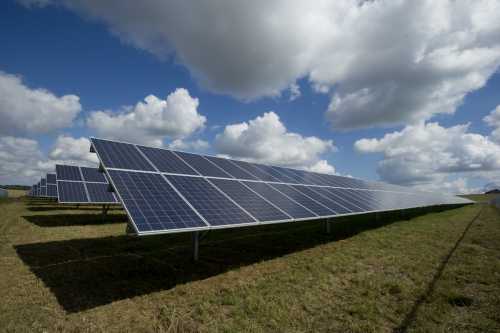
The Big Picture: Pooling Allowance to Buy Solar Panels for the School
Imagine your school has been heating its buildings and powering its computers for the last hundred years by burning black, dirty coal in the basement. The problem is, the smoke from the coal is making the sky gray, and a lot of the kids in the school are developing asthma and coughing all day. The principal and the teachers know they need to stop burning coal and put solar panels on the roof and wind turbines on the football field. But there is a massive problem: the solar panels and wind turbines cost a fortune. The school's regular budget is barely enough to buy chalk and fix the leaky pipes. They simply do not have the money to buy the green technology.
Now, imagine the rich alumni who graduated fifty years ago and made millions of dollars in the oil and coal industries. They are the ones who sold the coal to the school in the first place. They made their fortunes, and now they are sitting on massive piles of cash. The student council goes to these alumni and says, 'You made your money by selling us the coal that is making us sick. Now, you need to pool your money and pay for the solar panels so we can breathe clean air.' This is the fundamental concept of 'Climate Finance,' and in June 2026, the World Bank has just orchestrated the largest version of this in history: a $10 billion Global Fund for the Green Energy Transition.
The Concept of 'Common but Differentiated Responsibilities'
In the global classroom, the rich countries (like the US, the UK, Germany, and France) spent the last 150 years burning massive amounts of coal and oil to build their factories, their highways, and their wealth. They got rich by polluting the atmosphere. The developing countries (like Pakistan, India, Kenya, and Brazil) did not burn all that coal, so they are not responsible for the mess in the sky. But because the atmosphere is shared, the developing countries are now suffering the worst consequences: devastating floods, deadly heatwaves, and droughts that destroy their crops.
The World Bank's $10 billion fund is based on the UN principle of 'Common but Differentiated Responsibilities.' It means that while everyone has to help fix the climate, the rich countries that caused the problem have a much bigger responsibility to pay for the fix. This fund is designed to provide 'concessional finance.' That is a fancy grown-up word for 'super cheap loans and free grants.' If a developing country wants to build a massive solar farm, they normally have to borrow money from private banks at very high interest rates (like 10 or 12 percent), which makes the solar farm too expensive to build. The World Bank fund will lend them the money at 1 or 2 percent interest, or give them grants that do not have to be paid back at all. This makes green energy cheaper than coal, allowing developing nations to leapfrog the dirty industrial phase and go straight to clean energy.
The 'Just Transition': Protecting the Coal Miners
One of the most brilliant and humane aspects of this $10 billion fund is its focus on a 'Just Transition.' When you close down a coal mine to save the sky, what happens to the thousands of miners who have worked in that dark tunnel for thirty years? They do not know how to code software or install solar panels. If you just fire them, they will starve, and their families will be destroyed. They will vote for politicians who promise to reopen the coal mines, and the whole green project will fail.
The World Bank fund allocates billions specifically for retraining and social safety nets. In regions that rely heavily on fossil fuels, the fund will pay to build new 'Green Skill Universities.' A 45-year-old coal miner can go back to school, get paid a stipend to support his family while he studies, and learn how to maintain wind turbines or manufacture electric vehicle batteries. The fund also invests in the local infrastructure of these towns, building new parks, hospitals, and broadband internet, transforming them from dirty coal towns into beautiful, modern, green hubs. It ensures that the transition to a green economy leaves no worker behind, turning potential enemies of the climate into its biggest champions.
The Economic Boom of Green Jobs
For decades, politicians argued that saving the environment would destroy the economy. They said that if we stop burning oil, we will lose millions of jobs and become poor. The $10 billion fund is built on the exact opposite economic thesis: saving the environment is the biggest job-creation engine in human history. Building solar panels, manufacturing wind turbines, upgrading the electrical grid, and retrofitting millions of buildings to be energy-efficient requires massive amounts of human labor. You cannot outsource the installation of a solar panel on a roof in Lahore or Nairobi to a robot; it requires local workers.
Studies show that for every single dollar invested in fossil fuels, you create a certain number of jobs. But for every single dollar invested in green energy, you create three times as many jobs. This $10 billion fund is not just a charity project to save the polar bears; it is a massive, calculated macroeconomic stimulus. It will create millions of high-paying, future-proof jobs in the developing world. It will empower women, as the green sector actively prioritizes inclusive hiring. It will keep the money inside the local economy, because instead of a country spending its wealth importing expensive oil from a foreign dictator, it will spend its money paying local engineers to maintain the solar farm that belongs to them. The green transition is not an economic burden; it is the greatest economic opportunity of the 21st century.
Official World Bank Announcement
Historic commitment to our planet: The World Bank has approved a $10 Billion Global Fund for the Green Energy Transition, providing concessional finance to developing nations for a Just and rapid shift to renewable energy. @WorldBank
— World Bank (@WorldBank) June 23, 2026
Related Articles
The Macroeconomic Inflection Point: Navigating Sovereign Debt, Labor Recalibration, and Trade Fragmentation
Aug 22, 2026
The Macroeconomic Reckoning: Navigating the Convergence of Debt, Trade, and Technological Shifts
Aug 22, 2026
Comments (0)
No comments yet. Be the first to share your thoughts!
Want to join the discussion?
Please log in to post a comment.
Login NoworCreate an Account