
Euclid Mission Releases Definitive 3D Map of the Dark Universe, Revealing Unexpected Cosmic Voids

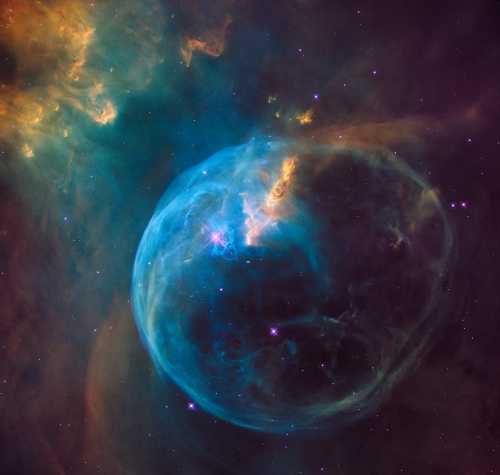
PARIS — In an unprecedented leap forward for observational cosmology, the European Space Agency (ESA) on Wednesday, July 9, 2026, disseminated the definitive three-dimensional map of the dark universe, generated by the Euclid space telescope.
The comprehensive dataset, which elucidates the structuraldistribution of dark matter across billions of light-years, has uncovered a series of colossal cosmic voids that contradict existing theoretical models of dark energy.
Mapping the HiddenFramework of the Cosmos
Launched in 2023, the Euclid mission was specificallyengineered to investigate the enigmaticcomponents that constitute roughly 95 percent of the universe. By measuring the distortions in the shapes of distant galaxies—a phenomenon known as weak gravitational lensing—scientists have successfullyreconstructed the underlyingskeleton of the cosmos.
The newly released topological analysis reveals that the cosmic web is not as uniform as the standard Lambda-CDM model predicts. Instead, the data indicates the presence of anomalously large, empty regions of space where dark matter density is significantly lower than anticipated.
"We are looking at the very scaffolding of the universe, and it is telling us a story we did not expect to hear. These vast voids suggest that dark energy may not be a constant force, but a dynamic entity that evolves over cosmic time." — Dr. Rene Laureijs, Euclid Project Scientist, ESA
Challenging the EstablishedParadigm
The discovery of these massive voids poses a formidablechallenge to the prevailingcosmologicalparadigm. If the expansion of the universe is accelerating at a variable rate, it would necessitate a fundamentalrevision of our understanding of physics, potentially invalidating Einstein's cosmological constant.
Furthermore, the Euclid team has cataloged over 100 million distant galaxies, providing an invaluablerepository for the global scientificcommunity to analyze the evolution of galactic structures over the past 10 billion years.
Official Mission Update: For the complete dataset, interactive 3D maps, and detailed scientific papers, refer to the official ESA Euclid mission portal: ESA Euclid Mission Official Portal.
Analysis: The release of this definitive map marks a watershedmoment in modern astronomy. By illuminating the invisiblearchitecture of the cosmos, Euclid is not merely confirming existing theories, but actively driving a revolutionaryshift in our comprehension of the universe's ultimatefate.
Related Articles

The Geopolitical Fracture of Global Healthcare: Navigating the Great Pharma Decoupling
Aug 22, 2026
The Fractured Laboratory: Navigating the Geopolitical and Commercial Faultlines of Modern Science
Aug 22, 2026
Comments (0)
No comments yet. Be the first to share your thoughts!
Want to join the discussion?
Please log in to post a comment.
Login NoworCreate an Account