
Pakistan on the Brink of History: Reaching Zero Wild Polio Cases and What It Means for Every Child

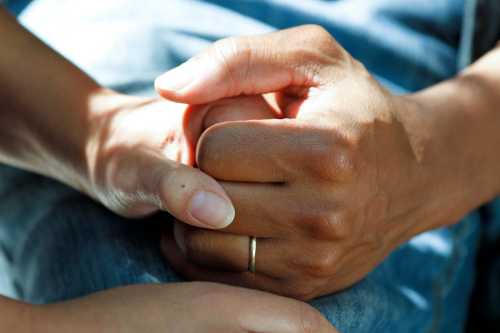
Imagine you are playing a giant game of hide-and-seek, but the thing hiding is a tiny, invisible germ that can make children very sick, preventing them from walking and playing. For decades, the people of Pakistan have been playing this exact game, searching high and low in every village, city, and remote mountain valley to find this germ and stop it in its tracks. This germ is called the wild poliovirus, and the disease it causes is polio. In 2026, Pakistan is standing on the edge of the greatest victory in the history of its public health system. After years of relentless effort, the country has officially recorded zero cases of wild polio for twelve consecutive months. This is not just a number on a medical chart; it is a monumental milestone that brings the entire world one step closer to eradicating a disease that has plagued humanity for thousands of years. To understand the magnitude of this achievement, we must look at the journey, the heroes who made it possible, and what this means for the future of every child in Pakistan and around the globe.
Understanding the Enemy: What is Polio?
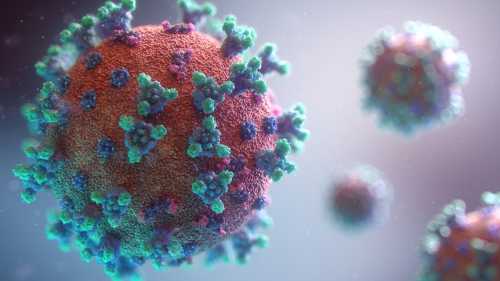
To truly appreciate this victory, we first need to understand the enemy. Polio is a highly infectious viral disease that primarily attacks young children. The virus enters the body through the mouth, often spread through contaminated water or food. For most people, it might just cause a mild fever or a sore throat, and they recover quickly. But in a small percentage of cases, the virus invades the nervous system and destroys the motor neurons, which are like the electrical wires that tell our muscles to move. When these wires are destroyed, the muscles stop working. If it affects the legs, the child becomes paralyzed. If it affects the lungs, the child cannot breathe without a machine. There is no cure for polio once the paralysis sets in; the only defense is prevention through vaccination. The polio vaccine is like a training simulator for the body's immune system. It shows the body's defenders what the polio germ looks like so that if the real germ ever tries to attack, the body is already armed and ready to destroy it instantly.
The 2026 Milestone: Twelve Months of Zero Cases
In the world of public health, stopping a disease is not just about stopping the sick children you can see; it is about stopping the silent spread you cannot see. The World Health Organization (WHO) requires a country to have zero wild polio cases for a minimum of twelve months, coupled with high-quality surveillance, before it can even be considered for eradication certification. As of mid-2026, Pakistan has proudly met this twelve-month benchmark. The last known case was detected in a remote district, and since then, the environmental surveillance teams—which test samples from sewage and wastewater across the country—have found absolutely no trace of the wild virus. This means the chain of transmission has been completely broken. The virus has nowhere to hide, and it has nowhere to go. This milestone is the culmination of billions of dollars, millions of hours of work, and an unwavering national commitment that survived political changes, security challenges, and natural disasters.
"Reaching twelve months of zero wild polio cases is a testament to the resilience of Pakistan's health workers and the trust of its communities. We are now staring at the finish line of a race that began over three decades ago." - Dr. representation from the WHO Pakistan office.
The Real Heroes: The Frontline Vaccinators
A milestone like this does not happen by magic; it happens because of people. The true heroes of this story are the hundreds of thousands of polio vaccinators, the vast majority of whom are women from the local communities. Imagine waking up before the sun rises, putting on your uniform, and walking for miles through muddy fields, climbing steep mountains, or navigating crowded, narrow streets just to give two drops of vaccine to a child. These women face extreme weather, from the scorching heat of Sindh to the freezing winters of Khyber Pakhtunkhwa. They face security risks and, in the past, faced misinformation from people who were afraid of the vaccine. Yet, they knock on every single door, day after day, campaign after campaign. They do not just deliver medicine; they are educators. They sit with mothers, listen to their fears, explain the science in simple terms, and build the trust that is the foundation of public health. Without these brave women, the zero-case milestone would be impossible.
Technology and Data: The Invisible Shield
While the vaccinators are the heart of the campaign, technology is its brain. In 2026, Pakistan's polio eradication program is a masterclass in digital health management. The days of using paper forms and guessing which children were missed are long gone. Today, every vaccinator is equipped with a smartphone running a specialized application. When they visit a house, they log the exact GPS coordinates, the number of children under five, and their vaccination status. This data is instantly uploaded to a central cloud database at the National Emergency Operations Center in Islamabad. Artificial intelligence algorithms analyze this massive sea of data in real-time to identify "micro-plans." If the AI notices that a specific neighborhood has a drop in vaccination coverage, it instantly alerts the local health officials, who can redirect teams to that exact street the very next day. Furthermore, genetic sequencing of the environmental sewage samples allows scientists to track the virus's DNA. If a virus is found, they know exactly where it came from and how it is moving, allowing them to build a digital wall around it.
The Global Impact: Why This Matters to the World
You might wonder, why does the whole world care about what is happening in Pakistan? The answer is simple: viruses do not respect borders. As long as a single child remains infected with the wild poliovirus in any country, children in all countries are at risk. The global polio eradication initiative has already eradicated two of the three strains of the wild poliovirus (Type 2 and Type 3). Only Type 1 remains, and it is endemic in just two countries: Pakistan and Afghanistan. By reaching zero cases in Pakistan, the global community is effectively cornering the virus. If Pakistan and Afghanistan can synchronize their efforts and stop the cross-border transmission, the wild poliovirus will be eradicated from the face of the Earth. This would be only the second time in human history that we have completely eradicated a human disease through vaccination, the first being smallpox in 1980. It would be a monumental triumph of science, cooperation, and human will.
The Final Push: Overcoming Remaining Challenges
Despite the euphoria of the twelve-month zero-case milestone, public health experts are cautious. They know that the final phase of eradication is the hardest. The virus is like a cornered animal; it will try to find any tiny crack in the defenses. The primary challenge remains the porous border between Pakistan and Afghanistan. Millions of people cross this border daily for trade, family visits, and displacement. If vaccination teams on both sides of the border are not perfectly synchronized, the virus can easily slip across the frontier, undoing months of hard work. To combat this, both countries have established joint cross-border coordination centers, sharing data and conducting simultaneous vaccination campaigns at all major crossing points. Another challenge is combating the lingering shadows of misinformation. While the vast majority of parents now enthusiastically vaccinate their children, a small fraction of the population remains hesitant due to rumors spread on social media. The government has responded by launching massive digital literacy campaigns, partnering with religious scholars, local influencers, and community elders to spread the truth about the vaccine's safety and necessity.
What This Means for the Future of Pakistan's Children
Ultimately, this public health victory is about the future. It is about ensuring that a child born in a remote village in Balochistan has the exact same right to walk, run, and play as a child born in a wealthy neighborhood in Lahore or Karachi. Eradicating polio means that future generations will never have to see the iconic image of the child in leg braces, or hear the stories of a disease that paralyzed millions. It means the massive financial resources currently spent on managing polio outbreaks and treating paralyzed patients can be redirected to other critical health needs, like maternal care, nutrition, and fighting other infectious diseases. Furthermore, the infrastructure built for polio—the cold chain systems that keep vaccines cold, the trained health workers, the digital tracking systems—becomes a permanent asset for the country's health system. When the next health emergency arises, Pakistan will not be starting from scratch; it will have a battle-tested, world-class public health defense network ready to deploy.
Official Alternative Source: For the most accurate and up-to-date data on polio eradication, please visit the official World Health Organization portal: WHO - End Polio Now
Historic milestone for public health in Pakistan! ???????? 12 consecutive months of zero wild polio cases. This brings us closer than ever to a polio-free world. Huge thanks to the frontline health workers and communities. Let's finish the job! #EndPolio #Pakistan #PublicHealth
— WHO Pakistan (@WHO_Pakistan) June 28, 2026

Comments (0)
No comments yet. Be the first to share your thoughts!
Want to join the discussion?
Please log in to post a comment.
Login NoworCreate an Account