
The AI Infrastructure Illusion: Navigating the Hidden Risks of the 2026 Tech Boom

The Silicon Gold Rush: A Mirage of Infinite Capacity
Think of the current global artificial intelligence boom not as a seamless technological revolution, but as a massive, continent-spanning logistics operation attempting to move Mount Fuji using only wheelbarrows. The ambition is staggering, the capital allocation is unprecedented, but the physical and systemic constraints are being willfully ignored by market optimists. This analogy perfectly captures the dichotomy of the 2026 AI landscape, where exponential software capabilities are colliding with linear, hard-physics limitations in energy distribution, cybersecurity, and supply chain logistics. Mainstream coverage celebrates the surface-level metrics, but a rigorous, bottom-up analysis reveals a far more precarious reality.
The Inflection Point: A Convergence of Capital and Constraint
The inflection point has arrived: global capital is aggressively funding generative AI infrastructure, driving consumer value to an estimated $172 billion annually in the United States alone by early 2026, with the median value per user tripling in just twelve months hai.stanford.edu . However, this unprecedented scaling is simultaneously triggering severe regional grid constraints, escalating AI-fueled financial cyber risks, and forcing a rapid, often painful recalibration of global supply chain dependencies.
The Hidden Friction: Three Blind Spots in the AI Narrative
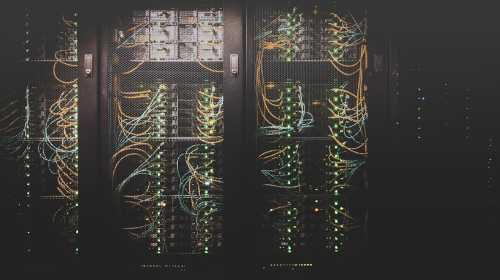
First, the physical infrastructure required to sustain this growth is fracturing under its own weight. AI data center power demand is actively breaking regional grids in 2026, forcing technology giants into trillions of dollars of on-site energy investments to bypass public utility bottlenecks enkiai.com . Mainstream financial coverage treats energy consumption as a mere operational expense, ignoring the reality that power density in AI-optimized racks now demands 30 kW to over 100 kW, compared to a mere 5-15 kW for traditional server racks enkiai.com . This creates a localized energy monopoly, where AI development is no longer constrained by algorithmic breakthroughs, but by raw access to baseload power and municipal water rights for cooling systems.
Second, the financial system is absorbing a hidden, compounding cyber risk premium that remains largely unpriced by the market. Artificial intelligence is fundamentally reshaping cyber risk in the financial sector by accelerating the speed, frequency, and breadth of vulnerability discovery www.elibrary.imf.org . While institutions deploy machine learning for defensive threat detection, adversarial actors are utilizing the exact same architectures to automate hyper-personalized phishing campaigns and exploit zero-day vulnerabilities at machine speed. The International Monetary Fund explicitly warned in mid-2026 that these supercharged, AI-driven cyberattacks threaten to make financial crises faster, more correlated across institutions, and significantly harder for central banks to contain ieu-monitoring.com .
Third, the prevailing narrative around supply chain optimization masks a dangerous centralization of critical digital infrastructure. While recent empirical findings confirm that generative AI adoption significantly enhances supply chain resilience by optimizing demand planning and logistics www.sciencedirect.com , it simultaneously creates profound vendor lock-in. Organizations are rapidly replacing fragmented, legacy software stacks with monolithic, proprietary AI platforms controlled by a handful of hyperscale providers. This false efficiency trades minor operational friction for existential systemic risk, where a single API failure, model hallucination, or geopolitical sanction can cascade catastrophically across global manufacturing and distribution networks.
The Counter-Narrative: Why Decentralization Mitigates Systemic Risk
Critics of this bearish infrastructure outlook argue that the current energy and grid constraints are merely transient bottlenecks that will be swiftly solved by market-driven innovation. They posit that the massive influx of private capital into small modular nuclear reactors and advanced geothermal projects will rapidly decouple AI growth from traditional grid limitations. While this technological optimism is mathematically sound in a theoretical vacuum, it ignores the glacial pace of regulatory permitting and grid interconnection queues. Capital can fund the construction of a reactor, but it cannot accelerate the decade-long bureaucratic processes required to bring it online, making the transient bottleneck argument a dangerous miscalculation of regulatory reality.
Echoes of the Dot-Com Fiber Optic Bubble
This dynamic bears a striking, almost algorithmic resemblance to the late-1990s telecommunications fiber-optic bubble. During that era, massive capital inflows were justified by the limitless, forward-looking demand for internet bandwidth, leading to a massive overbuild of dark fiber that vastly outpaced actual near-term commercial demand. When the anticipated revenue failed to materialize quickly enough to service the massive debt loads, the sector collapsed, wiping out billions in valuation and triggering widespread bankruptcies. The historical lesson is unequivocal: infrastructure buildouts driven by speculative, forward-looking demand curves are highly vulnerable to brutal reality checks. Just as the fiber-optic boom required a painful decade of consolidation and asset write-downs before becoming truly profitable, the current AI data center expansion faces an inevitable period of severe capital discipline.
The Innovation Imperative: Why Regulatory Friction is a Necessary Feature
Conversely, some techno-libertarian factions argue that stringent regulatory frameworks, such as the coordinated cybersecurity and AI action plans emerging globally in 2026, are purely protectionist measures designed to stifle innovation and cement the dominance of incumbent tech monopolies digital-strategy.ec.europa.eu . They contend that unrestricted, high-velocity AI deployment is the only way to maintain geopolitical competitiveness in a multipolar world. However, this perspective fundamentally misunderstands the nature of systemic risk. Unregulated AI deployment in critical infrastructure does not foster sustainable innovation; it fosters fragility. Strategic regulatory friction is not a barrier to progress, but a necessary circuit breaker that prevents localized algorithmic failures from cascading into macroeconomic shocks.
Strategic Imperatives for Market Participants
For local businesses and institutional investors, the current environment demands defensive, highly calibrated positioning. Corporate leaders must immediately audit their supply chain dependencies to ensure they are not overly reliant on a single generative AI provider, prioritizing multi-vendor architectures and localized data governance to mitigate concentration risk. Furthermore, businesses operating in energy-intensive sectors should proactively secure long-term power purchase agreements or invest in on-site microgrid capabilities to hedge against impending utility rate hikes and capacity shortages. Retail investors should pivot away from overvalued, pure-play AI software startups and reallocate capital toward the picks and shovels of this boom: grid modernization firms, advanced liquid cooling technologies, and cybersecurity specialists equipped to handle machine-speed threats.
The Six-Month Horizon: A Forecast of Consolidation
Over the next six months, the market will inevitably transition from a speculative relief rally phase to a rigorous show me phase. As the physical limits of regional power grids become undeniable, we forecast a moderate but sharp correction in the valuations of AI companies lacking proprietary energy solutions or clear, near-term paths to profitability. The true macroeconomic test will be the ability of hyperscalers to deliver on their generative AI return-on-investment promises without triggering widespread grid curtailments. If energy constraints force project delays, the window for easy capital formation will narrow rapidly, forcing a sector-wide consolidation where only the most vertically integrated, energy-resilient players survive.
Related Articles

The 2026 AI Trilemma: Regulatory Bifurcation, Grid Paralysis, and the End of Infinite Tokens
Aug 27, 2026
The Macro Fracture in AI: Navigating Compute Chokeholds, Open-Source Backlash, and the Productivity Mirage
Aug 23, 2026
Comments (0)
No comments yet. Be the first to share your thoughts!
Want to join the discussion?
Please log in to post a comment.
Login NoworCreate an Account