
The Compute Reality Check: Navigating the Hidden Fault Lines of the 2026 AI Buildout

The Foundation of Sand: Anatomy of the Capital Surge
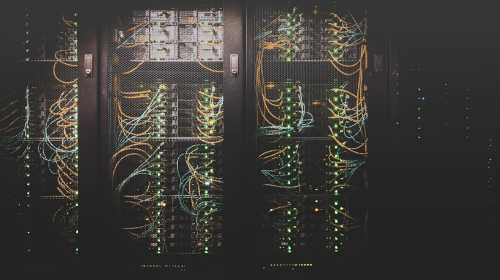
Treating the current artificial intelligence boom like a skyscraper built on a foundation of sand requires ignoring the structural load limits while fixating entirely on the architectural renderings. This structural dissonance defines the present technological landscape. In 2026, the convergence of tightening AI chip export controls and an unprecedented mobilization of over $500 billion in third-party capital for AI compute infrastructure has created a paradoxical market environment nvidianews.nvidia.com . While headline valuations suggest a frictionless technological utopia, the underlying mechanics reveal a system straining against physical, regulatory, and socioeconomic limits.
The Thermal Reality of Digital Progress
Mainstream financial commentary frequently isolates semiconductor export restrictions as the primary bottleneck for AI development, ignoring the far more consequential tremors in global energy grids. The unseen implication for capital markets is a severe compression of operational viability for data-dense enterprises. A recent scientific review confirmed that up to 90% of the electrical energy consumed by data centers is converted into waste heat, not stored computational value www.facebook.com . This thermodynamic reality forces a radical repricing of real estate and utility assets. Municipalities are no longer viewing hyperscale data centers as pure economic catalysts, but as grid liabilities. The capital expenditure required to cool these facilities is quietly cannibalizing the projected margins of AI service providers, a dynamic entirely absent from consensus earnings estimates.
The Labor Asymmetry and the Digital Underclass
Beyond the physical infrastructure, the socioeconomic architecture of generative AI is undergoing a silent, asymmetric shift. The prevailing narrative of "human-AI collaboration" obscures a more brutal reality of occupational hollowing. Recent labor market analyses indicate that generative AI labor displacement is actively fostering a "new digital underclass," characterized by systemic exclusion and the rapid devaluation of mid-tier cognitive labor www.linkedin.com . Unlike previous industrial revolutions that displaced manual labor while elevating administrative roles, this iteration targets the very knowledge workers who historically formed the stable middle class. The capital gains from this productivity leap are accruing almost exclusively to the owners of the compute infrastructure, exacerbating wealth concentration while depressing wage growth for a broad swath of the professional sector.
The Open-Source National Security Paradox
Simultaneously, the regulatory apparatus is grappling with the governance of open-weight models, framing them through a lens of existential risk. Policymakers are increasingly treating open-source AI regulation as a paramount national security concern, fearing that decentralized model weights could be weaponized by non-state actors www.linkedin.com . However, this regulatory posture ignores the innovation paradox. Heavily restricting open-source development does not eliminate the technology; it merely centralizes control within a handful of well-capitalized, closed-source monopolies. This consolidation stifles the decentralized auditing and rapid iteration that historically secure software ecosystems, ultimately creating a more fragile, single-point-of-failure technological landscape.
Nuance: The Grid Adaptation and Security Imperative
It is analytically necessary to acknowledge that the bearish interpretation of these macroeconomic and technological headwinds overlooks the adaptive capacity of modern markets. Proponents of current policy argue that targeted export controls successfully degrade the military AI capabilities of strategic adversaries, buying critical time for domestic defense innovation www.astutegroup.com . Furthermore, the energy demand narrative often ignores rapid advancements in model efficiency and next-generation cooling technologies. New regulatory frameworks, such as anticipated Federal Energy Regulatory Commission (FERC) modifications, are actively supporting the co-location of data centers with dedicated renewable generation, thereby insulating the broader public grid from AI-induced volatility cloudswit.ch . From this perspective, the current friction is not a systemic failure, but a necessary, temporary calibration period.
Echoes of the Electrification Boom
To understand the current trajectory of AI infrastructure, one must examine the early 20th-century electrification boom. During that era, massive capital deployment flooded into utility companies and electrical manufacturing, driven by the transformative potential of alternating current. However, the initial phase was characterized by severe grid strain, localized blackouts, and the bankruptcy of over-leveraged firms that underestimated the capital intensity of physical distribution networks. The lesson from that era is that infrastructure bottlenecks, not the underlying technology itself, dictate the ultimate winners. Just as the electrification boom culminated in massive industry consolidation and the rise of regulated utility monopolies, the AI compute build-out will inevitably force a shakeout of undercapitalized startups, leaving only those with secured, long-term power purchase agreements and sovereign backing.
Strategic Capital and Operational Reallocation
For local businesses and institutional investors, navigating this bifurcated environment demands immediate, defensive recalibration of capital allocation strategies. Corporate treasurers must audit their technology supply chains for direct exposure to jurisdictions affected by the new transaction-level AI chip permit regimes, actively diversifying hardware procurement to avoid sudden compliance freezes www.moltbook.com . Investors should pivot capital away from software-only AI applications with high customer acquisition costs and reallocate toward the foundational "picks and shovels" of the ecosystem. This includes thermal management solutions, grid-edge energy storage, and specialized semiconductor packaging facilities. For citizens and knowledge workers, the imperative is to aggressively upskill in AI-augmented workflow orchestration. Professionals must pivot away from routine cognitive tasks that are highly susceptible to algorithmic automation, moving instead toward roles requiring complex, physical-world problem-solving, regulatory navigation, and high-level emotional intelligence.
The 180-Day Horizon
Projecting six months into the future, the macroeconomic landscape surrounding artificial intelligence will harden into a state of entrenched bifurcation. We will likely witness the onset of a "compute credit crunch," a phenomenon where mid-tier AI startups, unable to secure affordable GPU access or municipal power allocation, face forced acquisition or bankruptcy. Conversely, well-capitalized sovereign AI projects and mega-cap technology firms will solidify their competitive moats. These entities will leverage their massive, institutional financing platforms to dictate market terms and secure long-term power purchase agreements nvidianews.nvidia.com . The next six months will not yield a sudden, catastrophic collapse of the broader AI narrative. Rather, the market will undergo a painful, necessary maturation. Equity valuations will stop pricing speculative, infinite-growth software multiples and begin demanding tangible, energy-adjusted returns on computational capital. The era of frictionless AI expansion is over; the era of infrastructural reality has begun.
Related Articles
The AI Infrastructure Illusion: Navigating the Hidden Risks of the 2026 Tech Boom
Sep 02, 2026
The 2026 AI Trilemma: Regulatory Bifurcation, Grid Paralysis, and the End of Infinite Tokens
Aug 27, 2026
Comments (0)
No comments yet. Be the first to share your thoughts!
Want to join the discussion?
Please log in to post a comment.
Login NoworCreate an Account